What’s next for design?
The inevitable transition from artifacts to alignment.
Generative AI has changed the design landscape almost overnight. When tools can produce endless artifacts at superhuman speed, the value of design leadership is no longer in making things—it’s in making sense of things. The leaders who thrive next won’t be the ones producing the most options, but the ones who can build clarity, consensus, and confidence around the right things.
To understand this shift, it helps to look at how the role of the design leader has evolved across three eras: the Creator, the Amplifier, and the emerging Aligner.
Act I: The Creator
For decades, the archetype of design leadership was the singular creative genius. Paul Rand embodied this model, producing iconic identities for IBM, UPS, and Westinghouse from a deeply independent perspective.
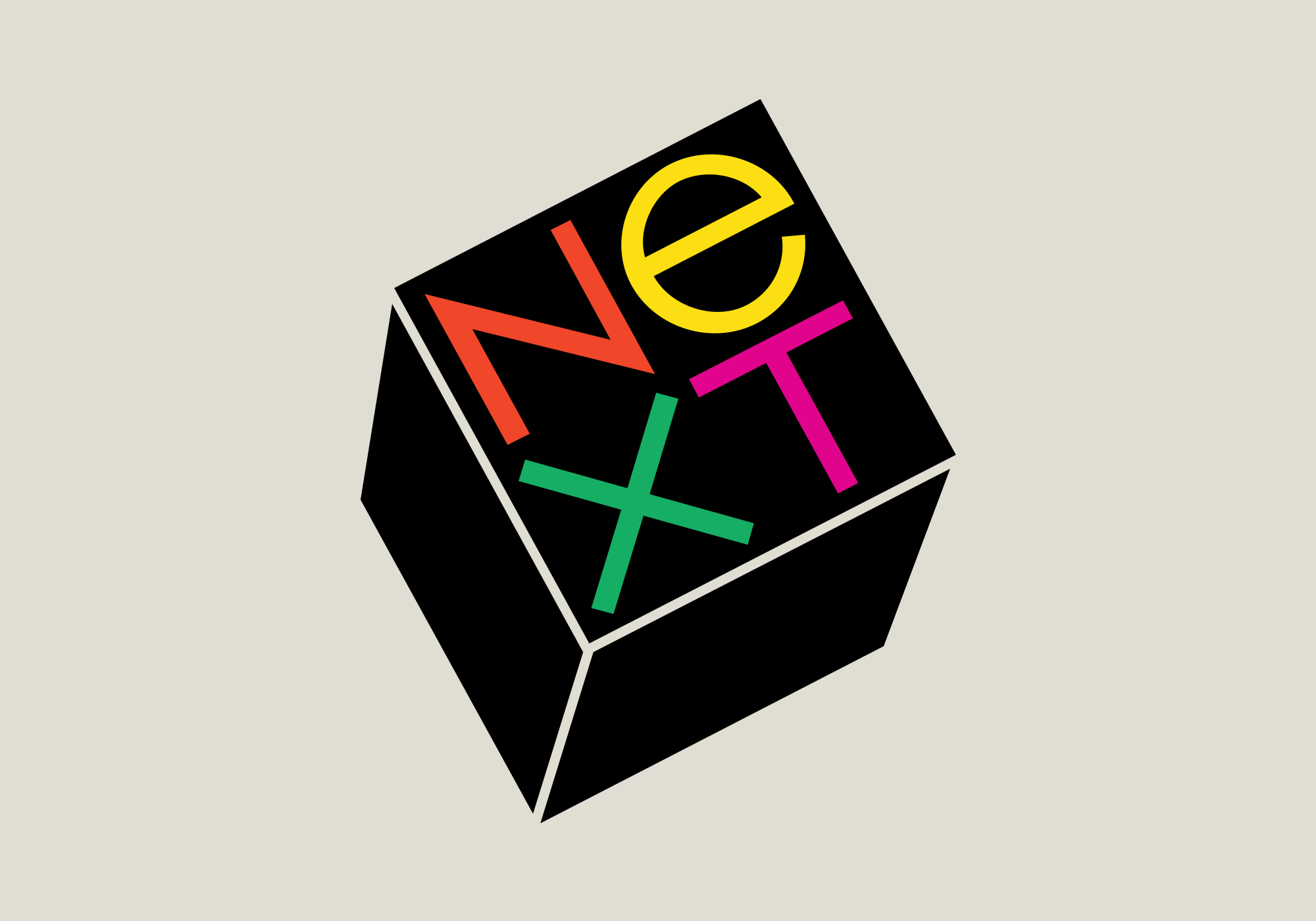
The story of Rand’s work for NeXT Computers captures the era perfectly: Steve Jobs hired him on a fixed $100,000 fee (substantial in 1986) for a single logo and identity system, with no revisions. Rand created the solution, and the client accepted the vision.
This era was defined by a lone expert shaping the answer. Today, that world feels almost quaint.
Act II: The Amplifier
The next evolution brought us the art director or creative director, the Amplifier, who guides teams rather than working solo. The role has been about orchestrating inputs (research, insights, strategy) and outputs (visual artifacts), and driving teams to produce multiple directions that align with project needs. Ultimately, client stakeholders chose among those options.
Generative AI has complicated this model. Now the Amplifier can direct not only designers but machines, scaling the number of visual options exponentially.
Pentagram partner Paula Scher’s high-profile use of generative AI on the illustrative system for performance.gov is a clear example.
“Pentagram partner Paula Scher unapologetically defends using generative AI”
Whether you’re directing a team or a model, the Amplifier still shapes the direction, but the designer risks being lost in the mix.
Act III: The Aligner
A recent Fast Company piece asked nine design leaders what they hoped AI would do for them. Many responses focused on how AI could optimize or accelerate their existing tasks. What the conversation misses is that, as in many other industries, the role itself is fundamentally changing.
AI is flattening the field of artifact creation and lowering the barrier to entry for Amplifiers. When anyone can generate dozens of polished visual directions in minutes, the strategic differentiator becomes something else entirely.
Enter the Aligner, the design leader whose primary value lies not in generating artifacts, but in guiding organizations toward shared understanding and coherent decision-making.
In a world of abundant options, alignment becomes the scarce resource.
The new challenge isn’t producing the most compelling visual; it’s helping clients recognize which visual actually solves their problem. Building clarity within cross-functional teams, often with conflicting priorities, becomes a core design skill.
Alignment is no longer a soft competency; it’s the strategic center of design leadership.